Mutianyu in brief
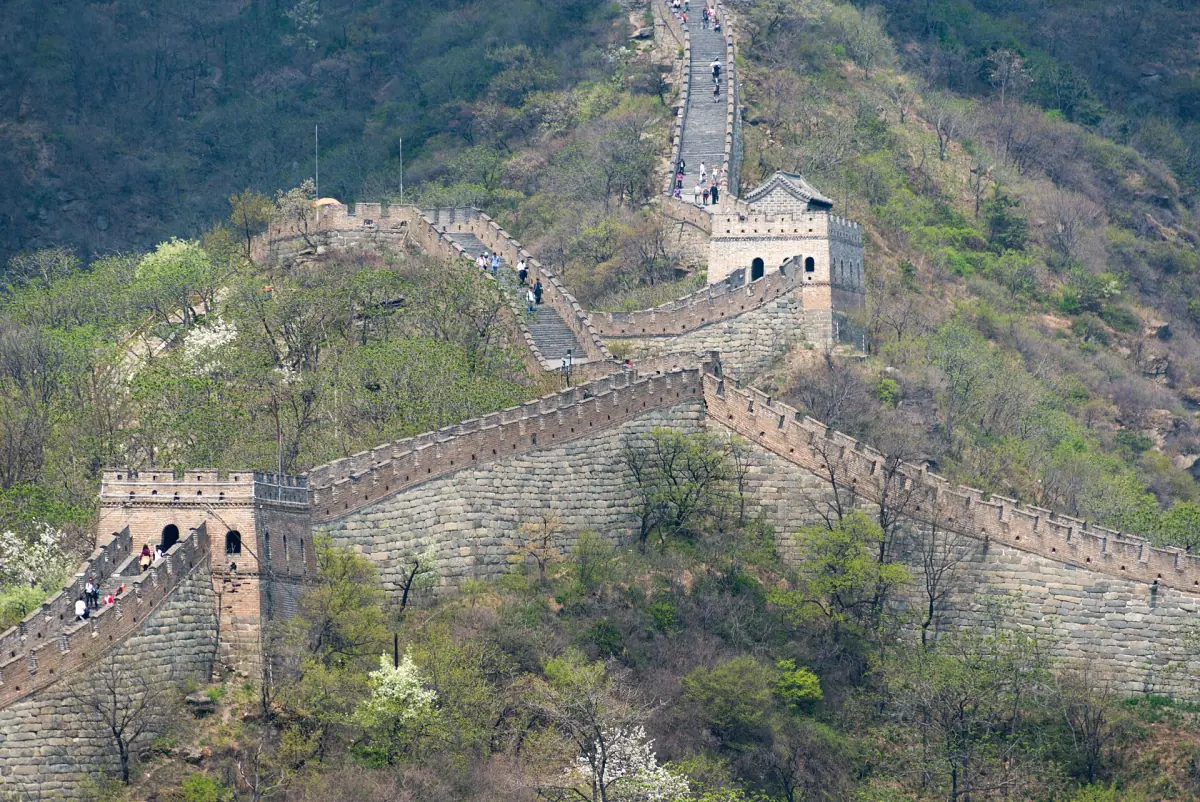
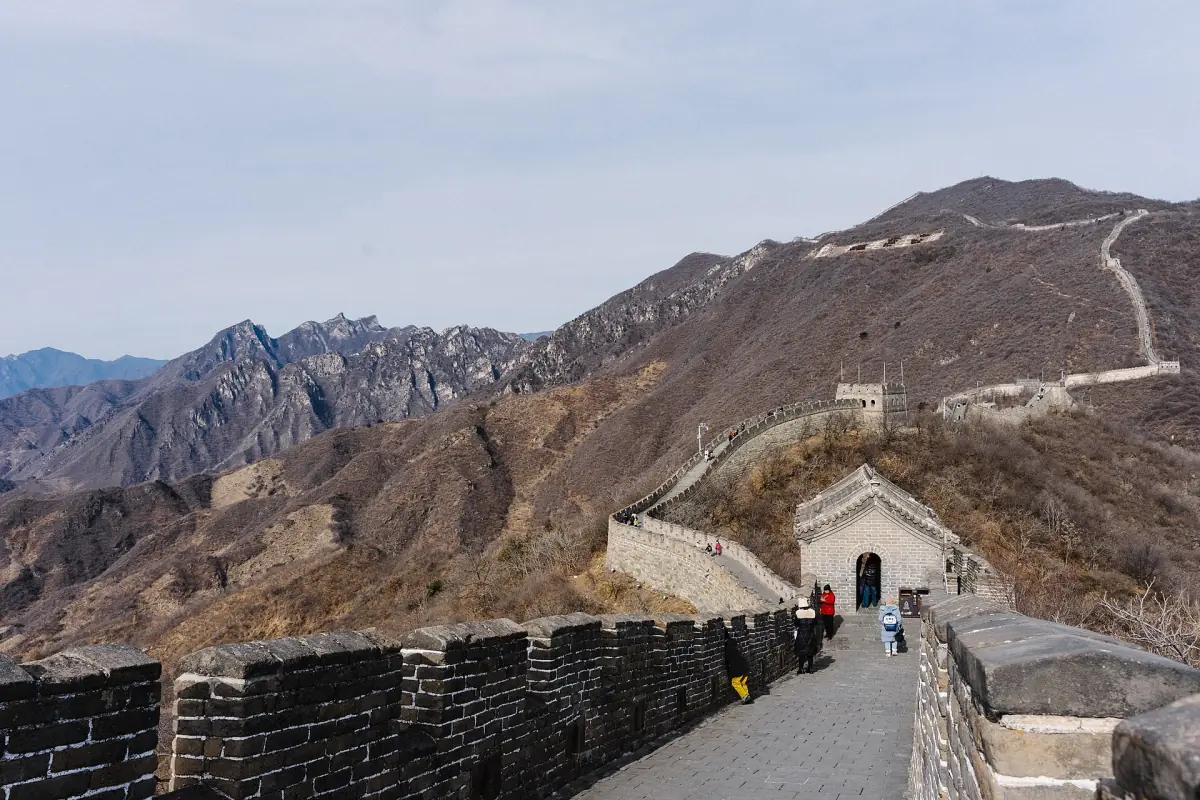
Mutianyu lies in Huairou district, in the municipality of Beijing, roughly 70 km from the city centre. The wall you walk today is a Ming section. It is known for towers set close together and for battlements on both sides of the walkway.
The history has three layers. There is an early wall from the 6th century, a Ming fortification that begins in 1404, and a modern restoration that began in the 1980s. What you see on the ridge is mostly the Ming wall in restored form, not a fully original structure.
Timeline
The main dates, in order.
| Date | What happened |
|---|---|
| Mid-6th century | An early wall is built in the Northern Qi dynasty |
| 1404 | The pass is fortified; the Ming section begins with General Xu Da |
| 1569 | The wall is rebuilt under Qi Jiguang |
| 1983 | Restoration begins with the approval of the State Council (1982 to 1986 in some accounts) |
| 1987 | UNESCO listing of the Great Wall |
| 2000 | Tourist operations are reorganised |
| 2006 | National heritage protection listing |
| 2011 | Rated a 5A tourist attraction |
| 2014 | New visitor service centre |
| 2026 | Beijing's wall protection regulation takes effect on 1 March; repair work begins between towers 16 and 17 on 26 May |
The start of the modern restoration is given as 1983, with approval from the State Council, or as the years 1982 to 1986. Either way, the work began in the early 1980s.
Great Wall tours with a history angle
A guide on the wall adds context to the towers and the restoration. Compare Mutianyu tours from Beijing with live prices and availability.
The Ming wall at Mutianyu
Where the walls and towers come from.
The pass of 1404
The present Ming section is linked to General Xu Da, and the pass was fortified in 1404. This is the date to remember for the Ming wall at Mutianyu.
Rebuilding in 1569
The wall was rebuilt in 1569 under General Qi Jiguang. That is a milestone in the Ming story. It does not mean every stone you walk on dates from that year.
Earlier walls
An earlier wall stood here in the Northern Qi dynasty, in the middle of the 6th century. That does not mean the bricks you see are that old. The visible structure is Ming, with later repair.
Towers and battlements
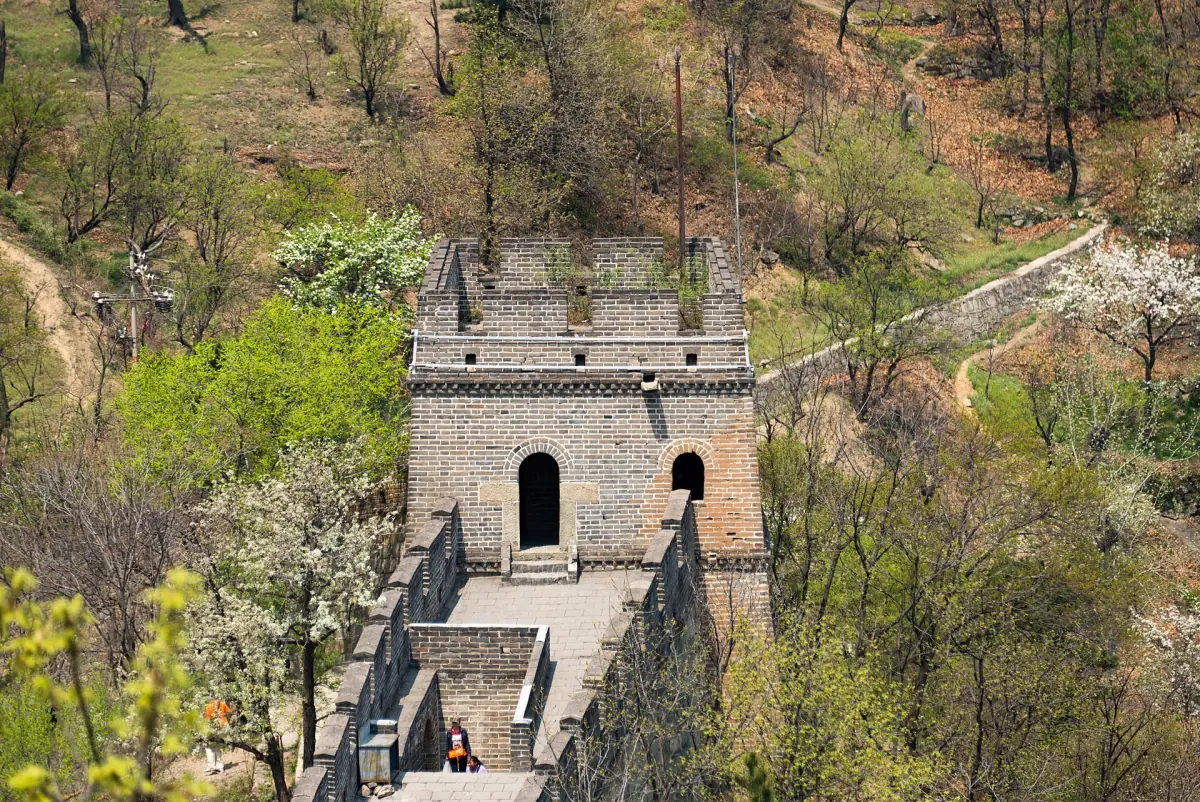
The Zhengguan terrace is made of linked towers. Battlements on both sides of the wall are a feature of Mutianyu. Zhengguan Pass and the Dajiaolou are among the named structures.
Restoration and protection
From the 1980s to Beijing's 2026 rules.
Modern work on the wall began in 1983, after the State Council approved it. The decades since then brought the listing in 1987, tourist reorganisation in 2000, national heritage protection in 2006, the 5A rating in 2011 and a new service centre in 2014.
Repair continues. Restoration of parts of the wall between towers 16 and 17 began on 26 May 2026. The inside of tower 16 stays open. Check the current status before you plan to walk that far.
The wall at Jiankou, north-west of Mutianyu, has its own restoration. It was announced in 2024 and covers 915 m, 6 towers and 5 wall sections, with a target of November 2026. Restoration is not the same as opening. Beijing's protection regulation of 1 March 2026 bans organised activities on sections that are not open to visitors. Read the hiking guide for the rules.
See the history on site
What to look for as you walk.
Linked towers
Look at how towers stand close together and how the walls between them connect. That is the Zhengguan terrace pattern.
Battlements on both sides
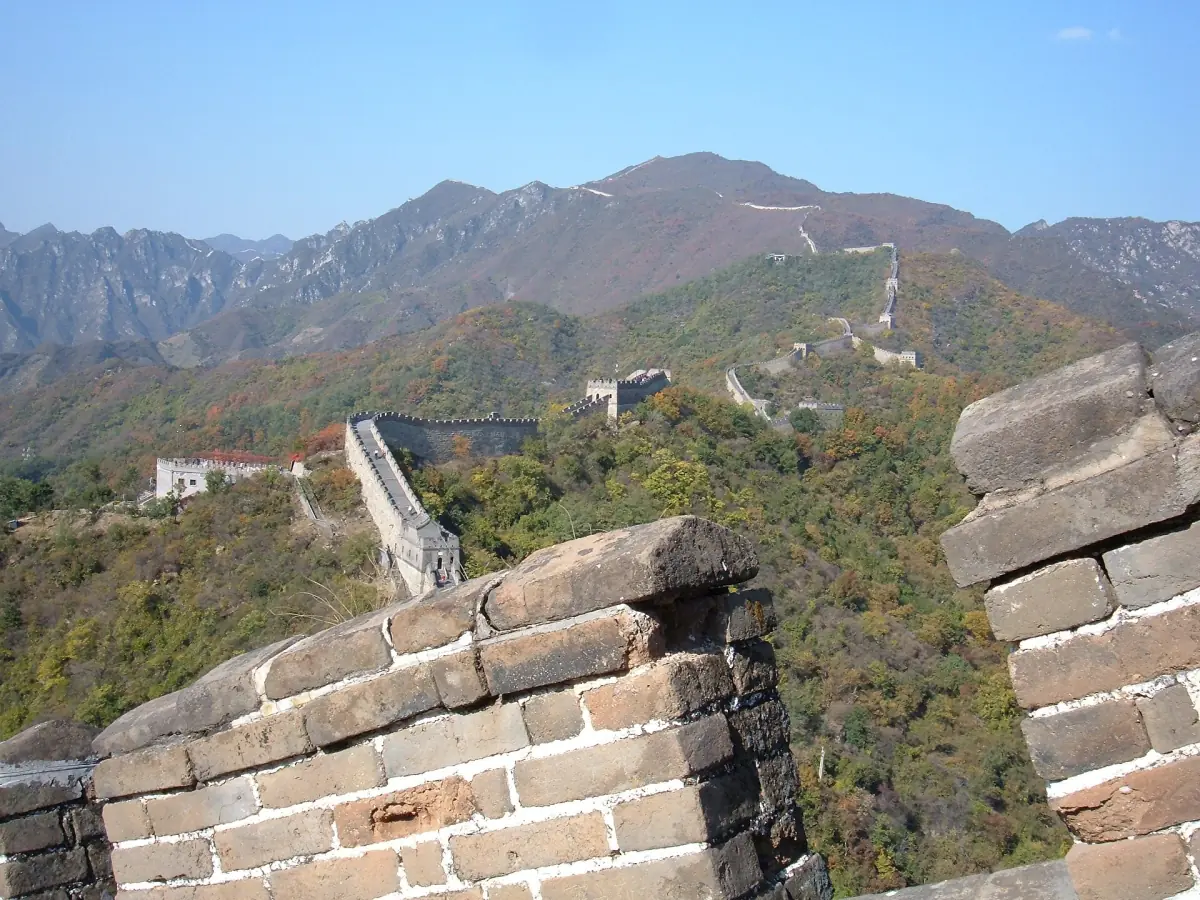
Battlements run along both sides of the walkway. Look through the openings to the hills on either side.
Respect the stone
Do not climb on the battlements or write on the wall. Repair work is under way in places, so follow the signs.
For the Forbidden City in Beijing, its history and its last emperor, see the Forbidden City history guide.
Mutianyu history: frequently asked questions
When was Mutianyu built?
The Ming pass was fortified in 1404, and General Xu Da is credited with the start of the present section. The wall was rebuilt in 1569 under Qi Jiguang. An earlier wall stood here in the middle of the 6th century.
Who built the Great Wall at Mutianyu?
The Ming section began under General Xu Da, and Qi Jiguang directed the rebuilding of 1569.
Is the wall at Mutianyu original?
It is a Ming wall with extensive modern restoration that began in 1983, or in 1982 to 1986 in some accounts. Parts have been rebuilt, and repair continues, for example between towers 16 and 17 since 26 May 2026.
What makes Mutianyu different from other sections?
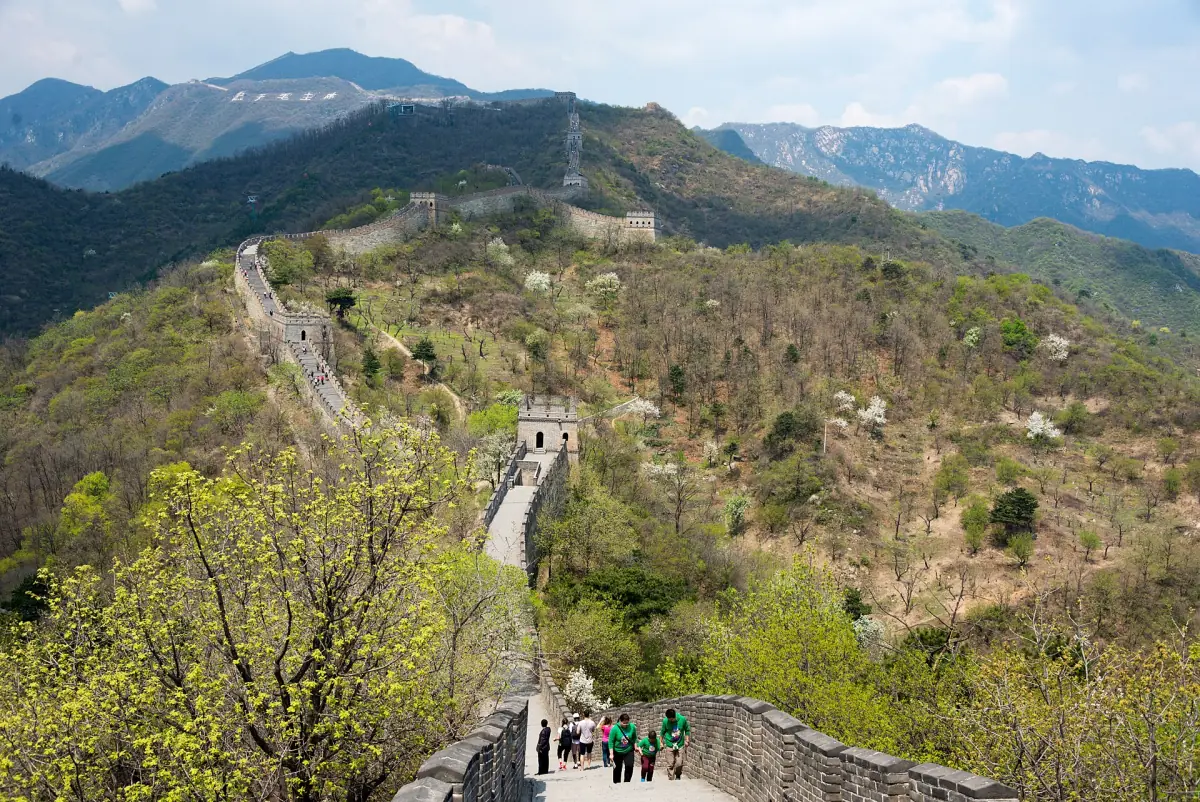
The towers stand close together, and the battlements run along both sides of the wall. The Zhengguan terrace is formed by linked towers.
Is Mutianyu a UNESCO site?
The Great Wall was placed on the UNESCO list in 1987. Mutianyu is one section of it. It also gained national heritage protection in 2006 and a 5A tourist rating in 2011.
Is Jiankou part of the same wall?
Jiankou lies north-west of Mutianyu and is a steep, rugged stretch that is not open to visitors. See the hiking guide for the rules that apply.